
Jester Minute (1972–1974)
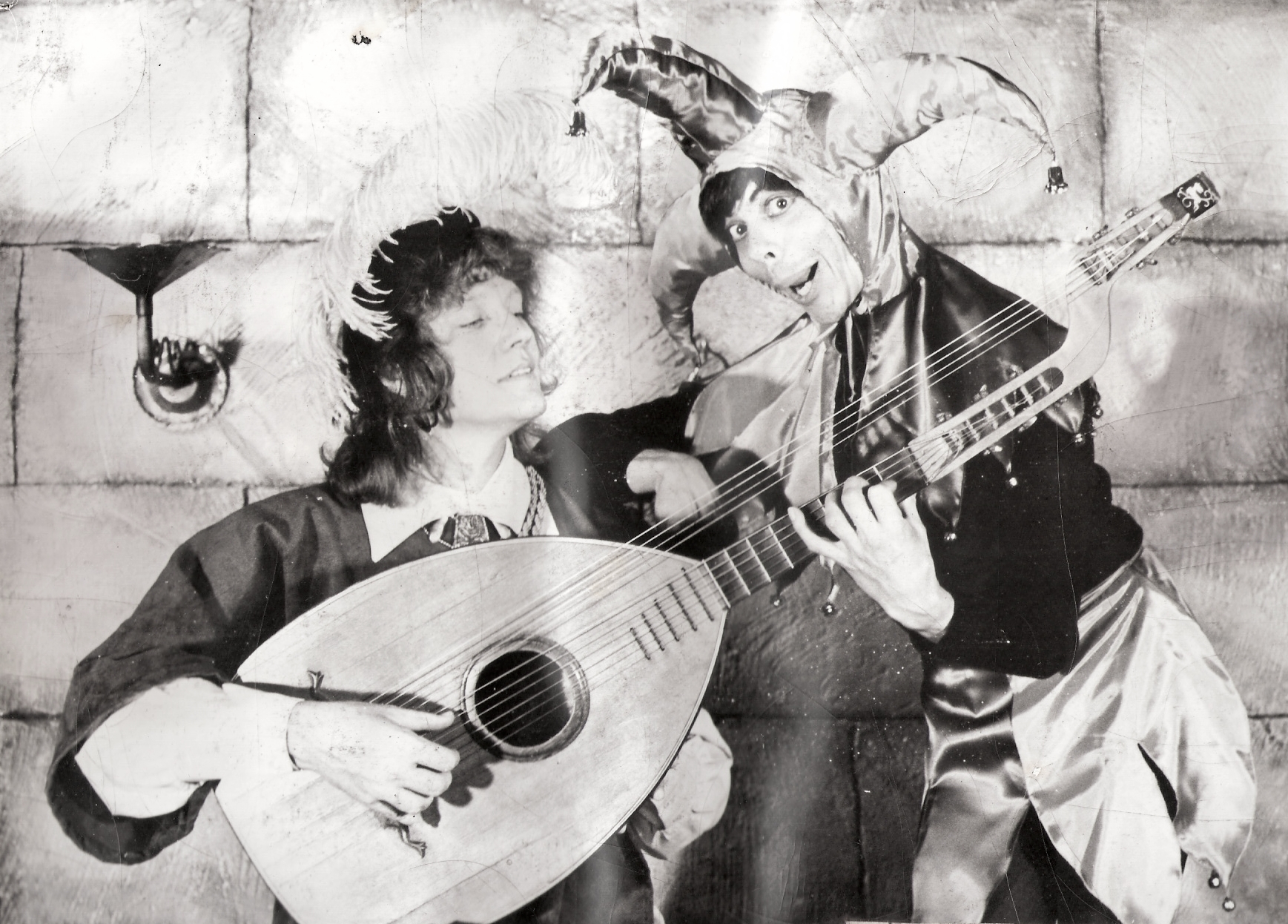
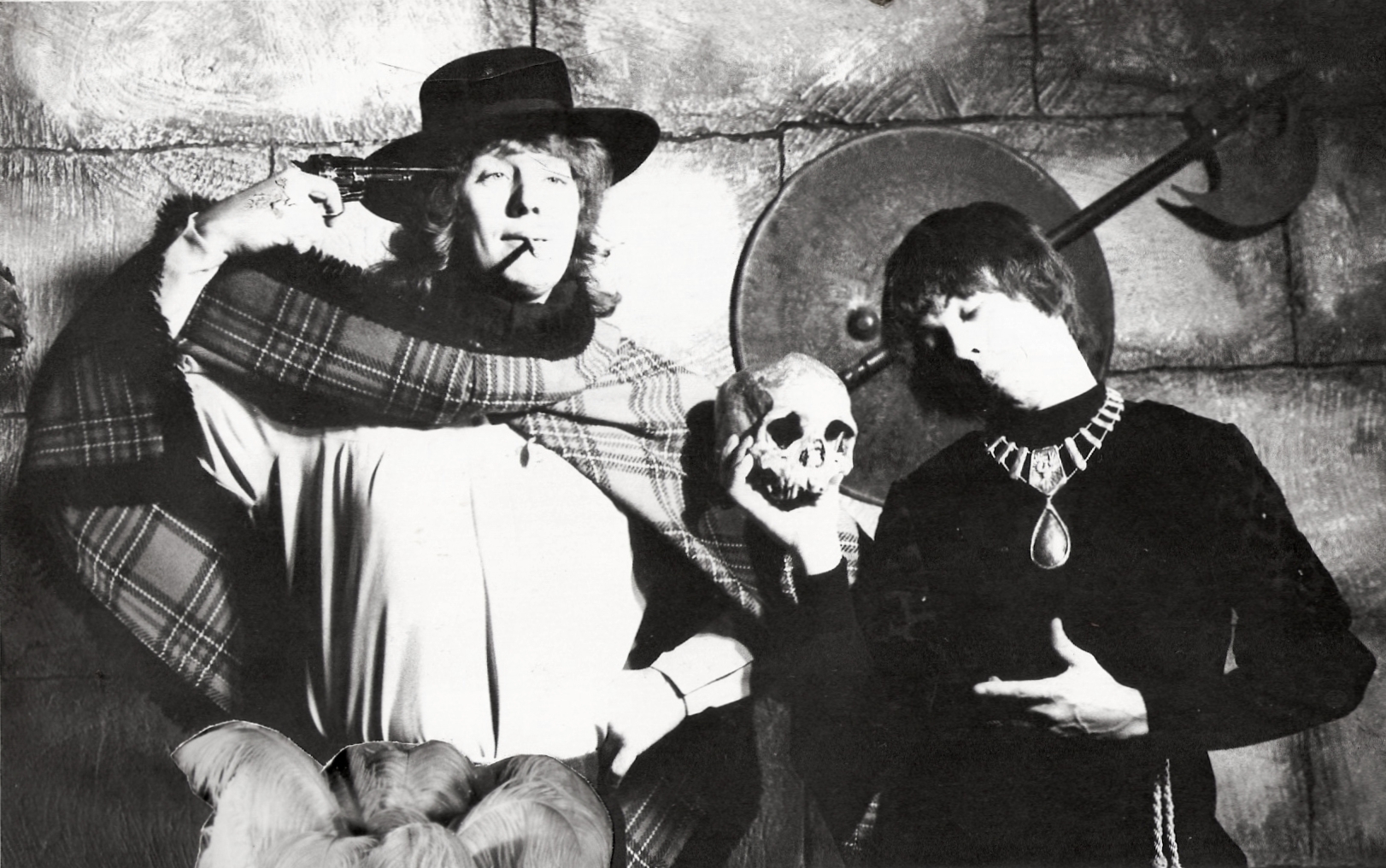
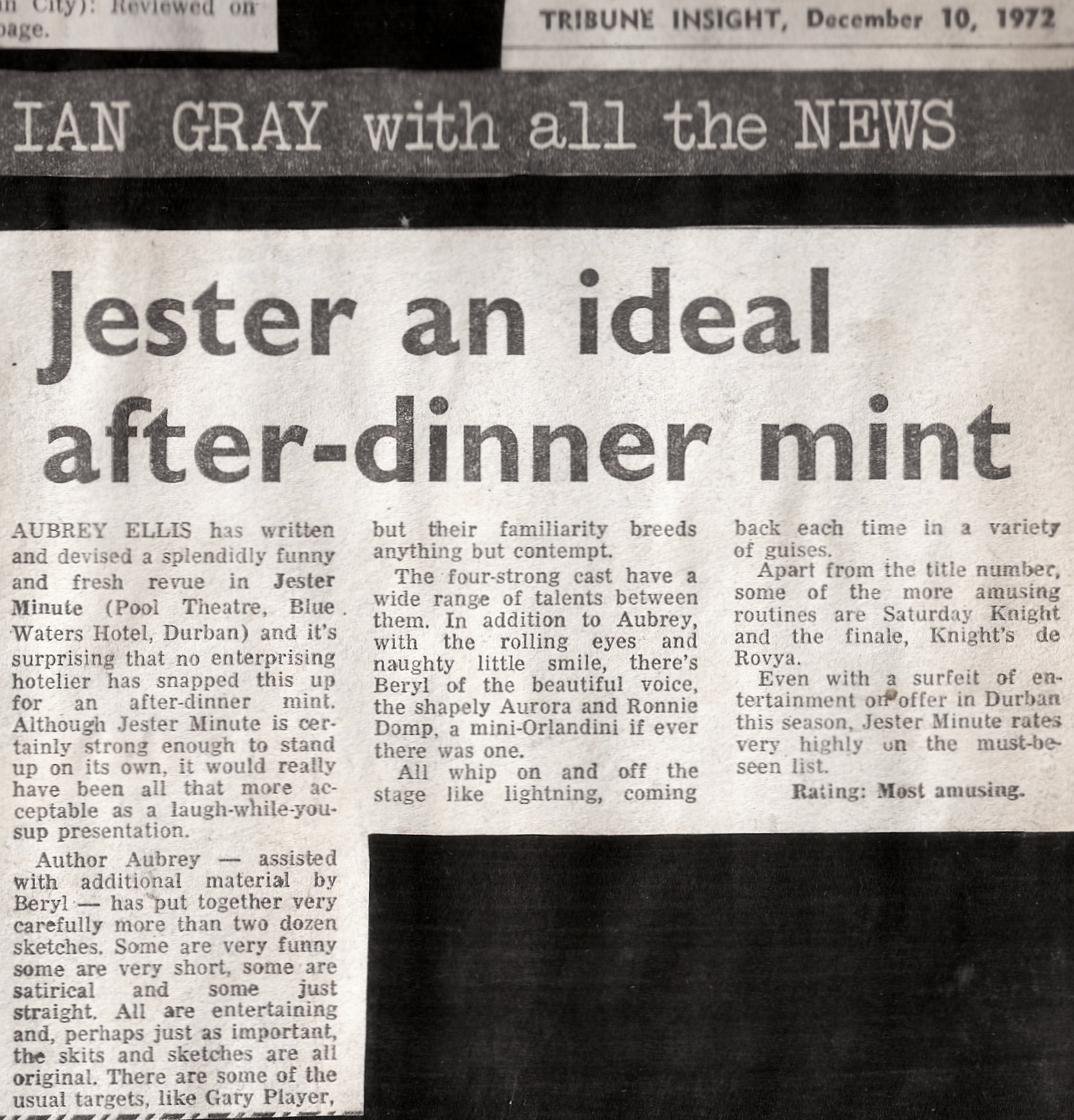
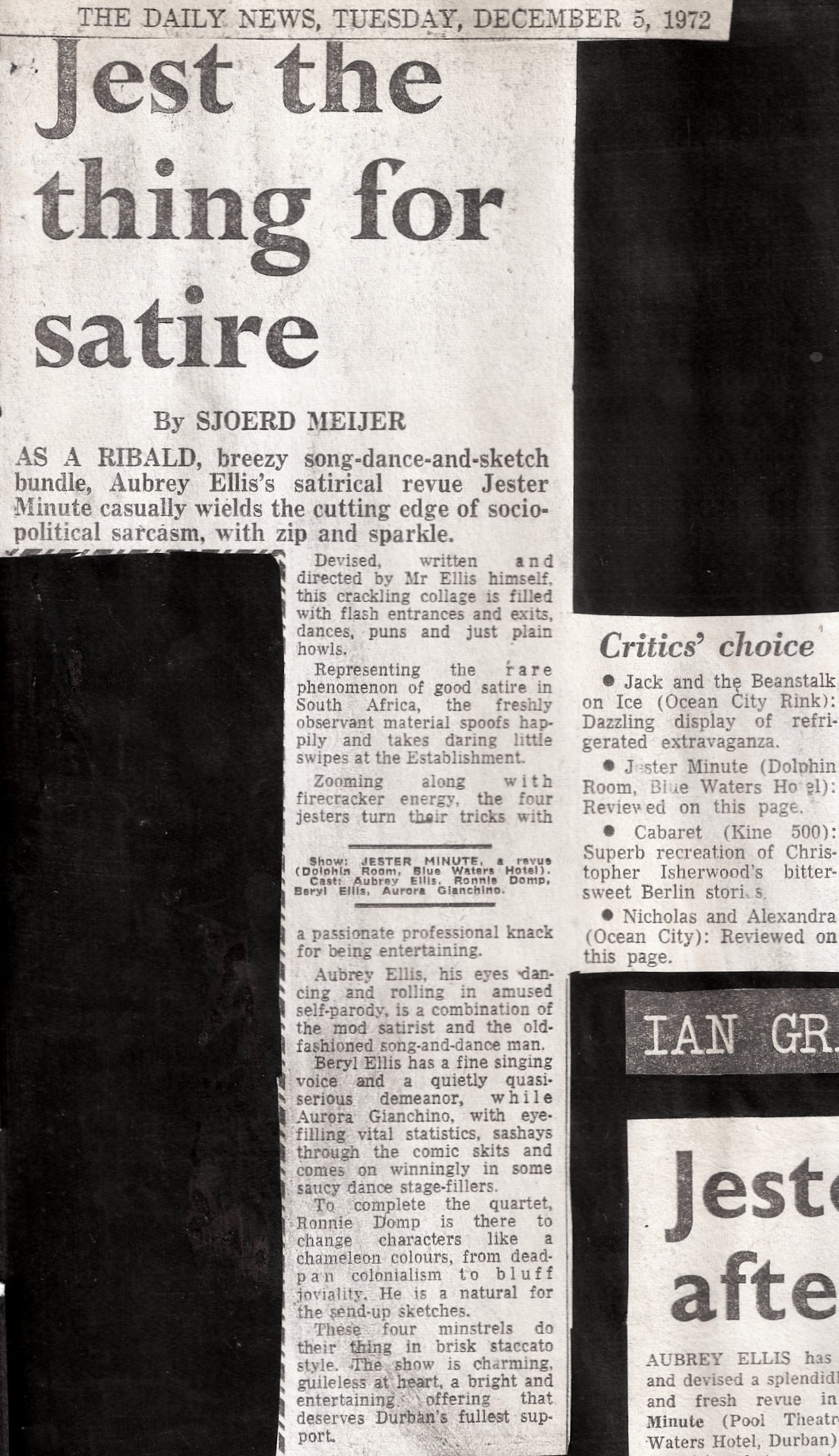
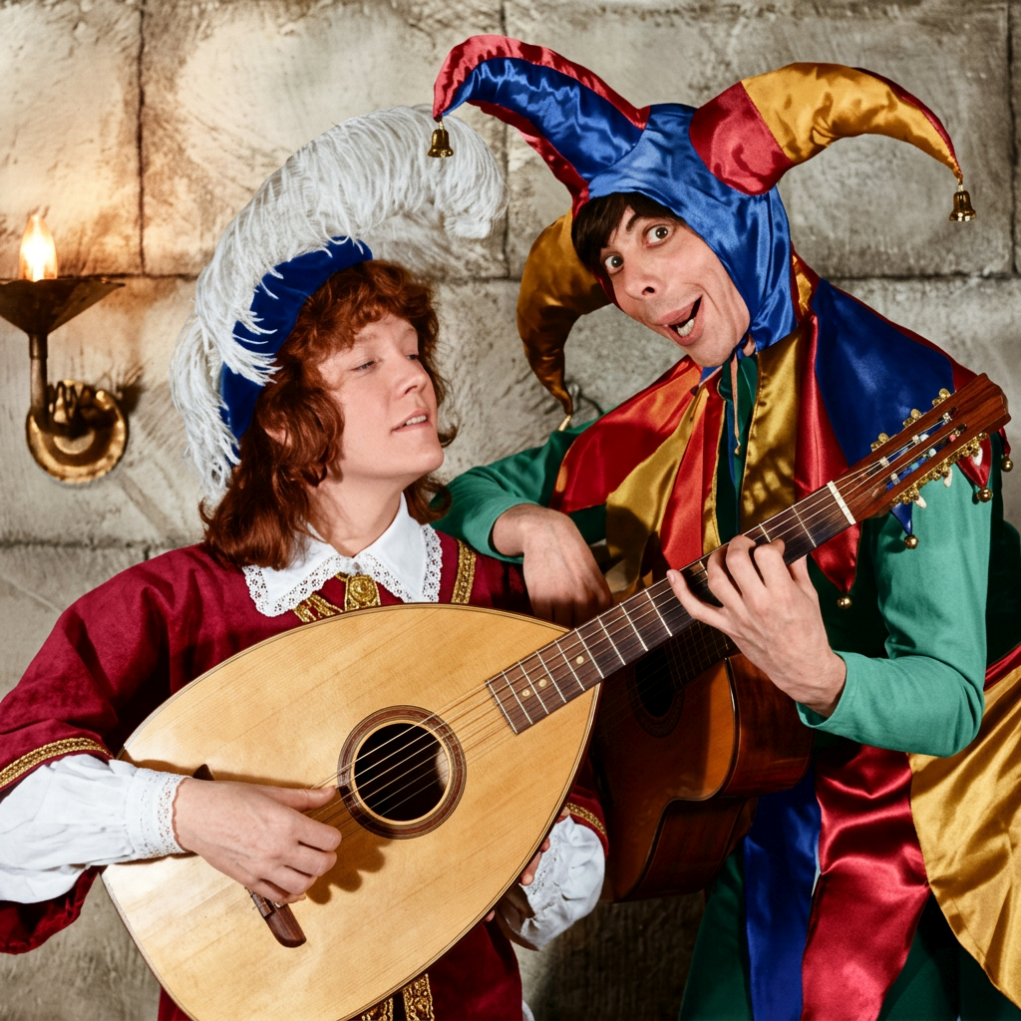
By 1972, the Belt had found its winning formula. Jester Minute — an original satirical revue written by Aubrey Ellis with Ian Lawrence and Beryl, and choreographed in part by Ian and Aurora — settled in as the venue’s signature show and would run, in various forms and casts, for the better part of two years.
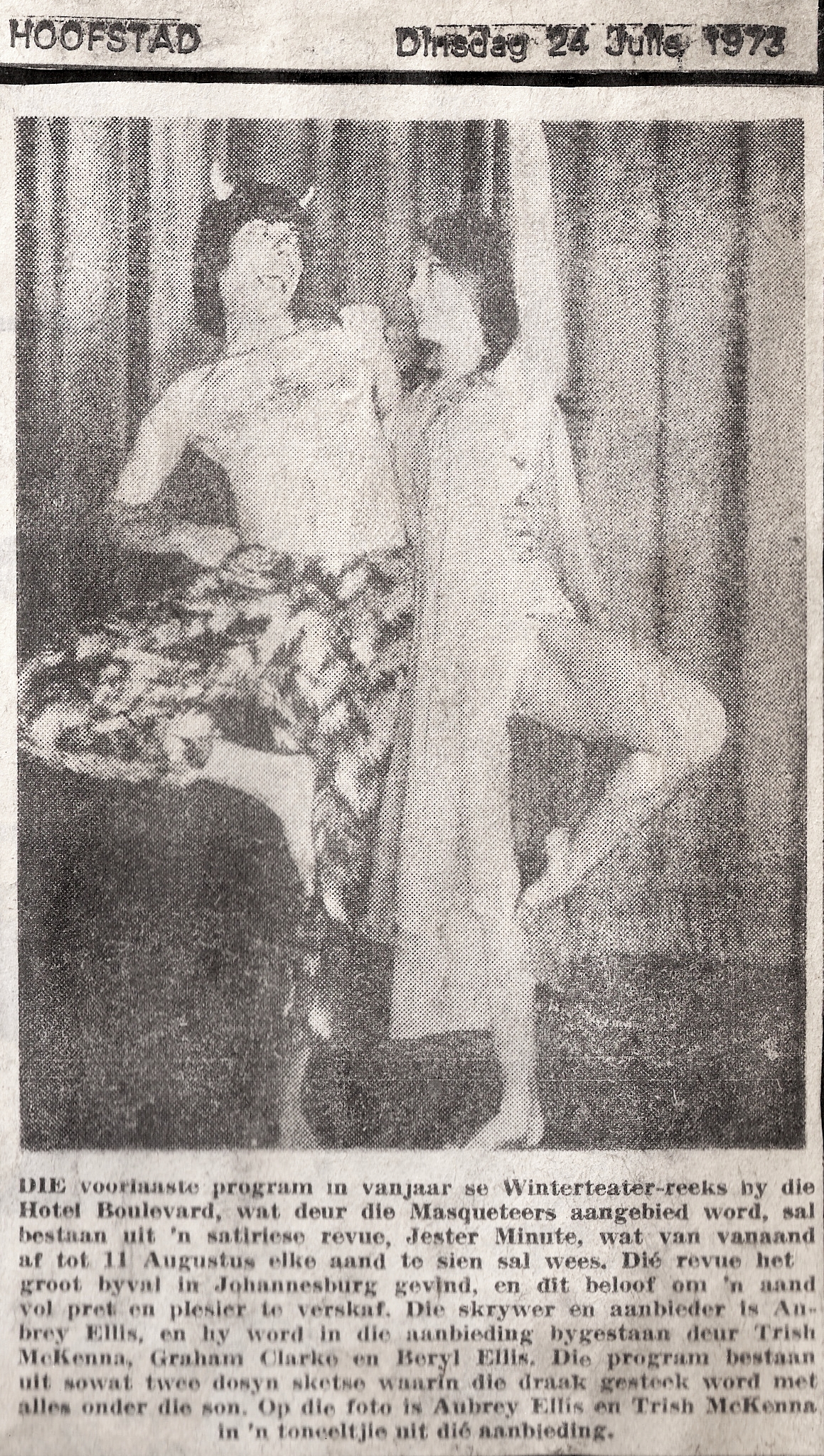
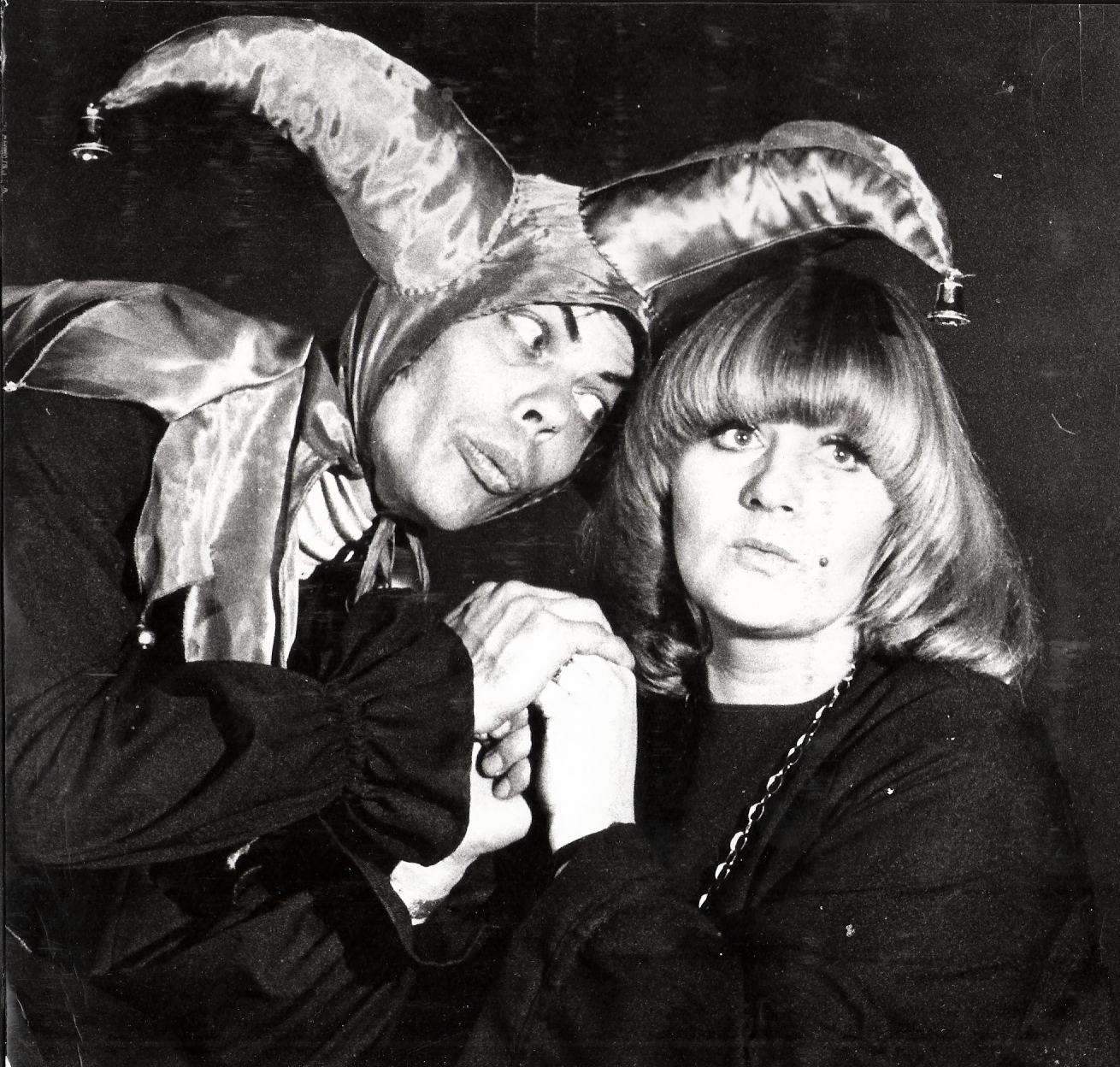
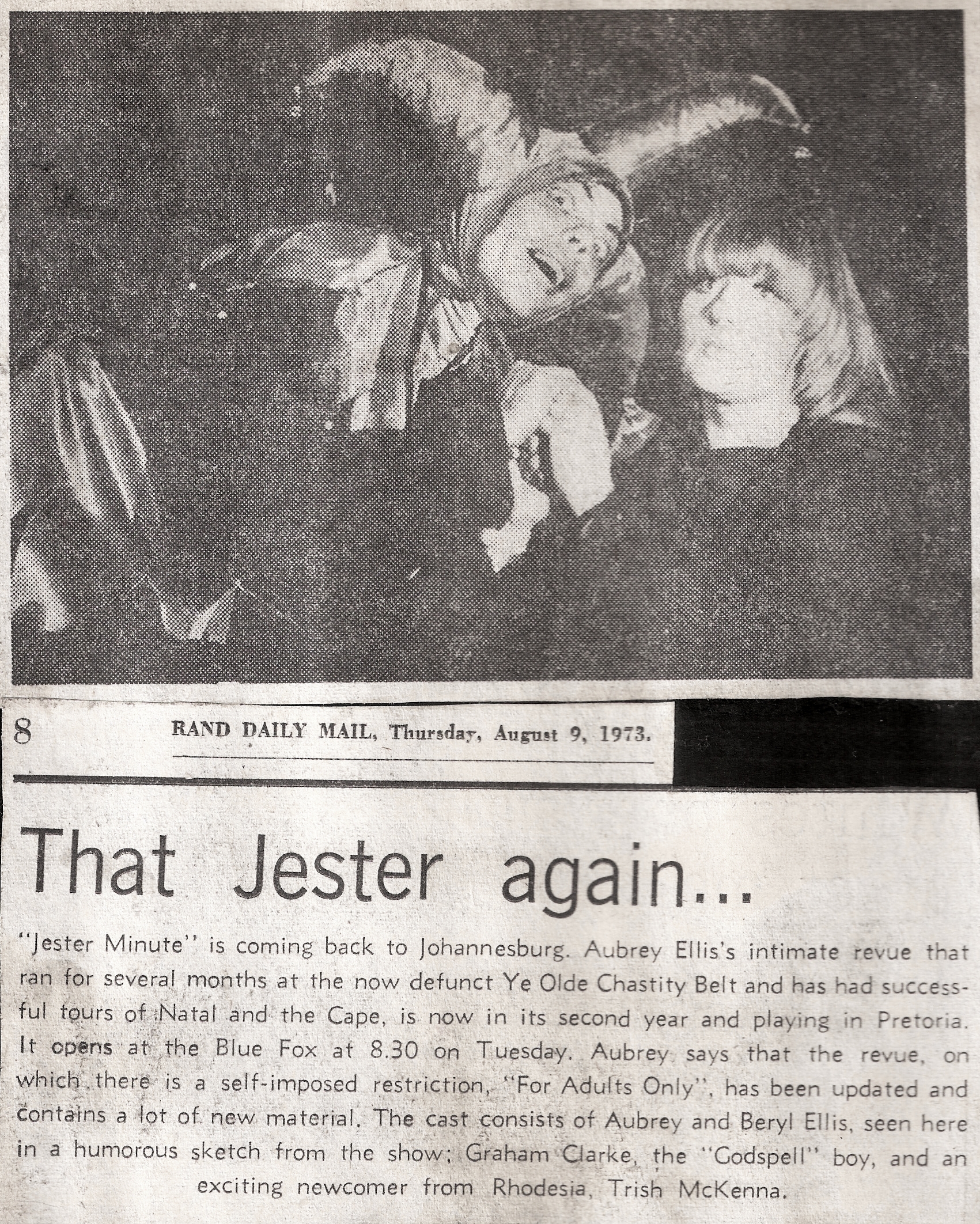
The cast changed more than once. Ian Lawrence eventually left the show, replaced by newcomer Ronnie Domp, whose arrival — pictured in a “skin-tight snake charmer costume” alongside Aurora — was itself news. By 1973, Z Kerbal — Aubrey’s old friend from the Oliver! days, now a successful nightclub entrepreneur — was sufficiently taken with the show that he financed a full national tour under his own name: “A Zeke Kerbel presents Aubrey Ellis’ smash-hit musical comedy revue… Jester Minute.”
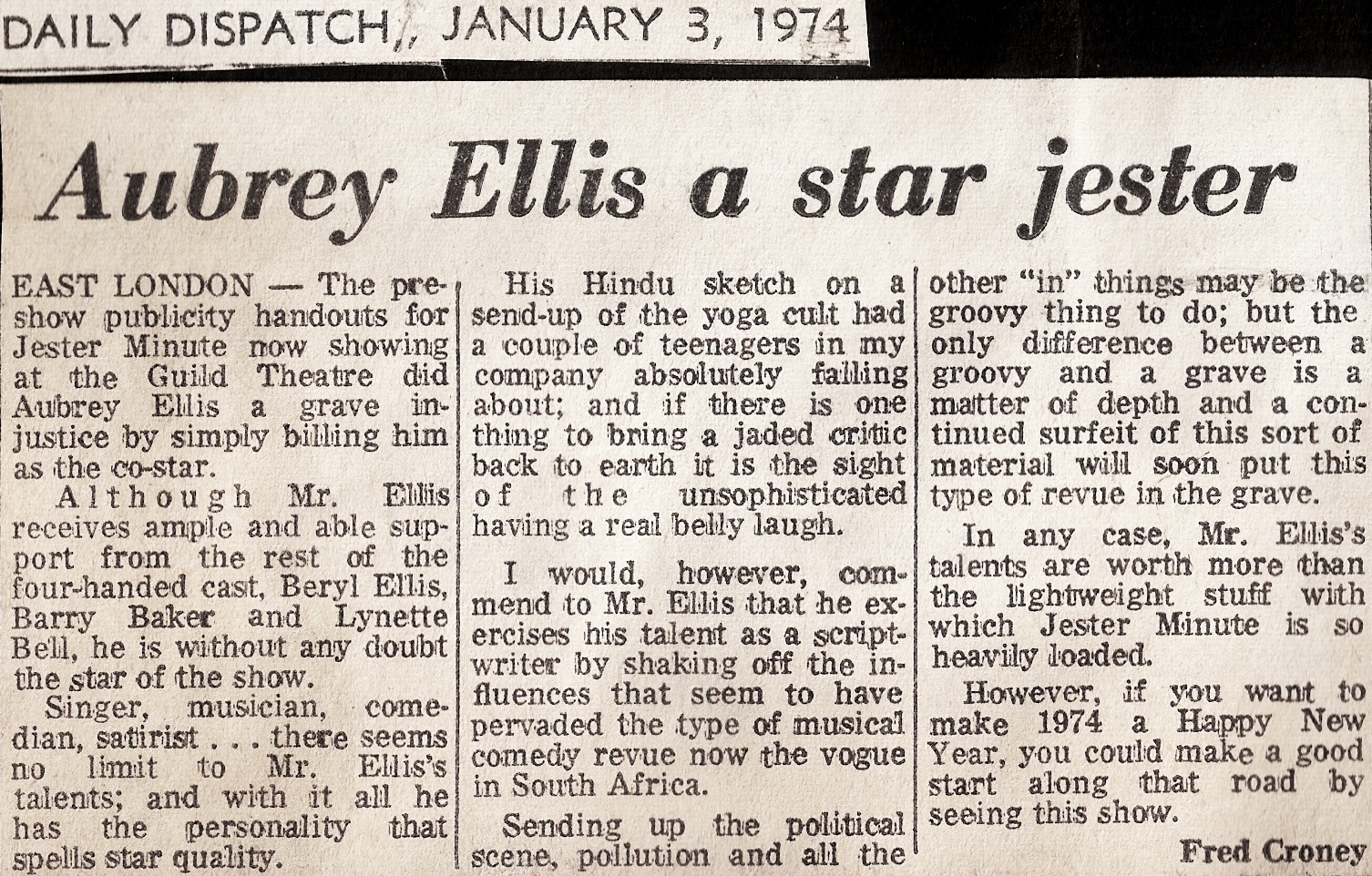
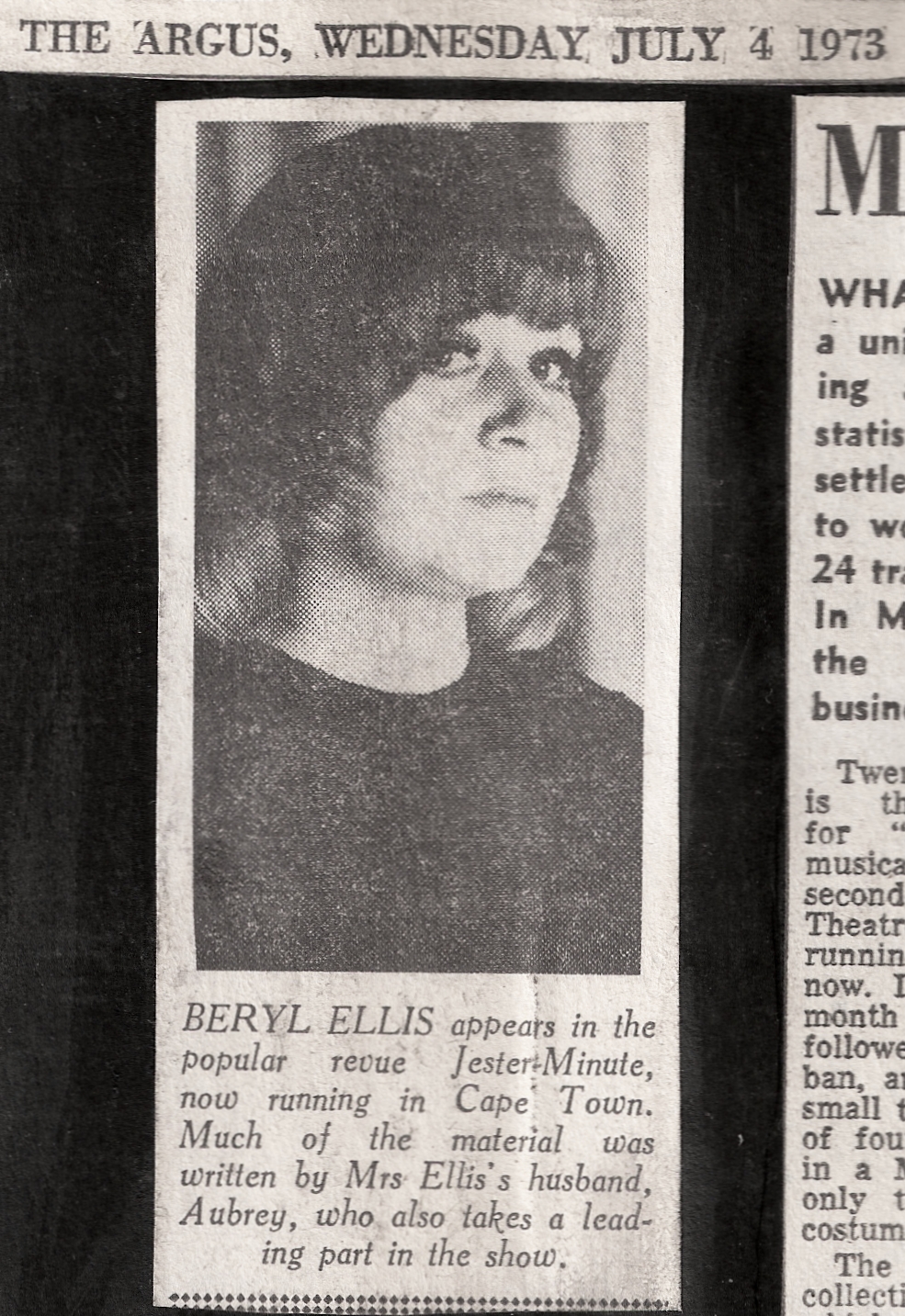
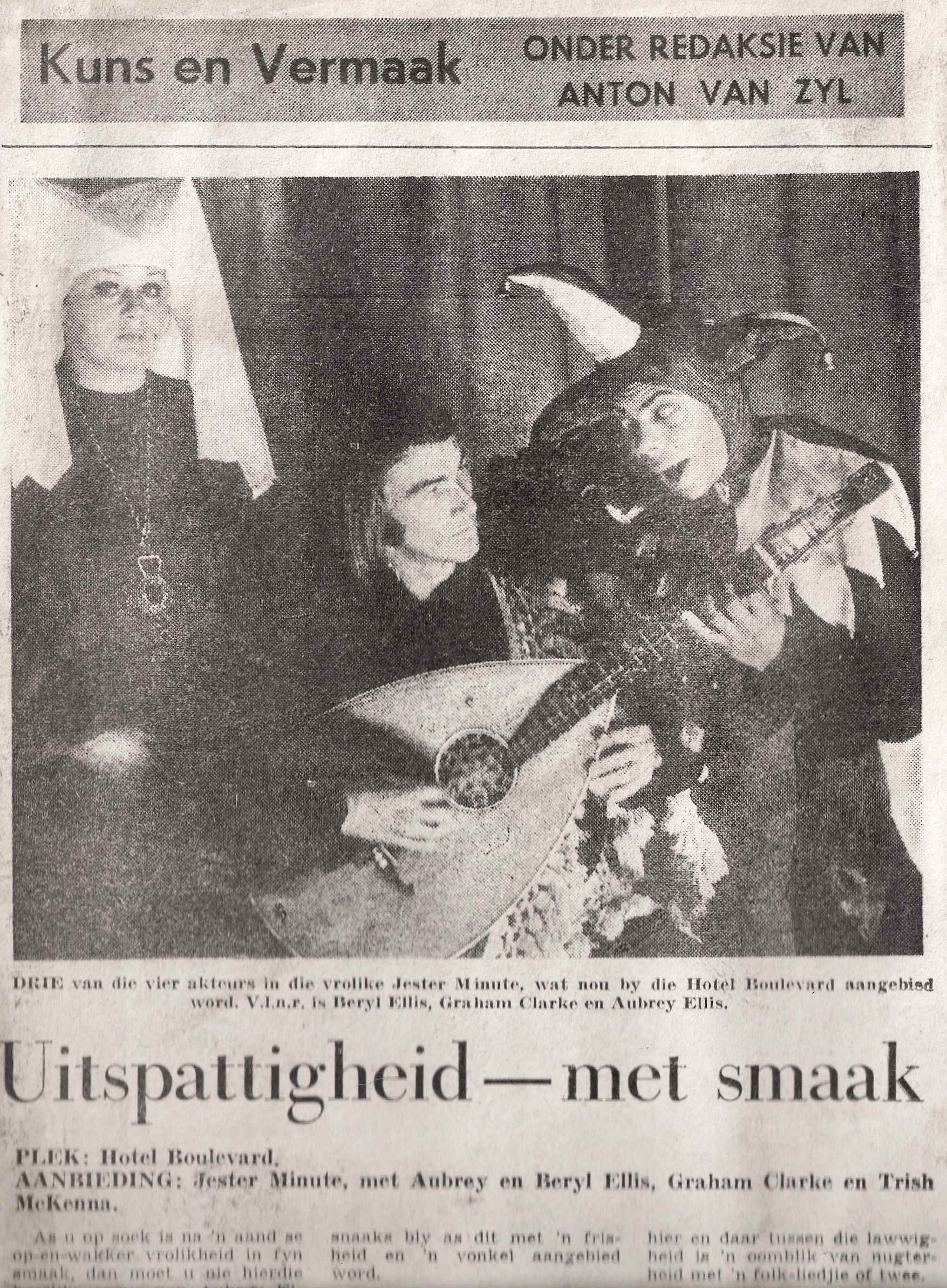
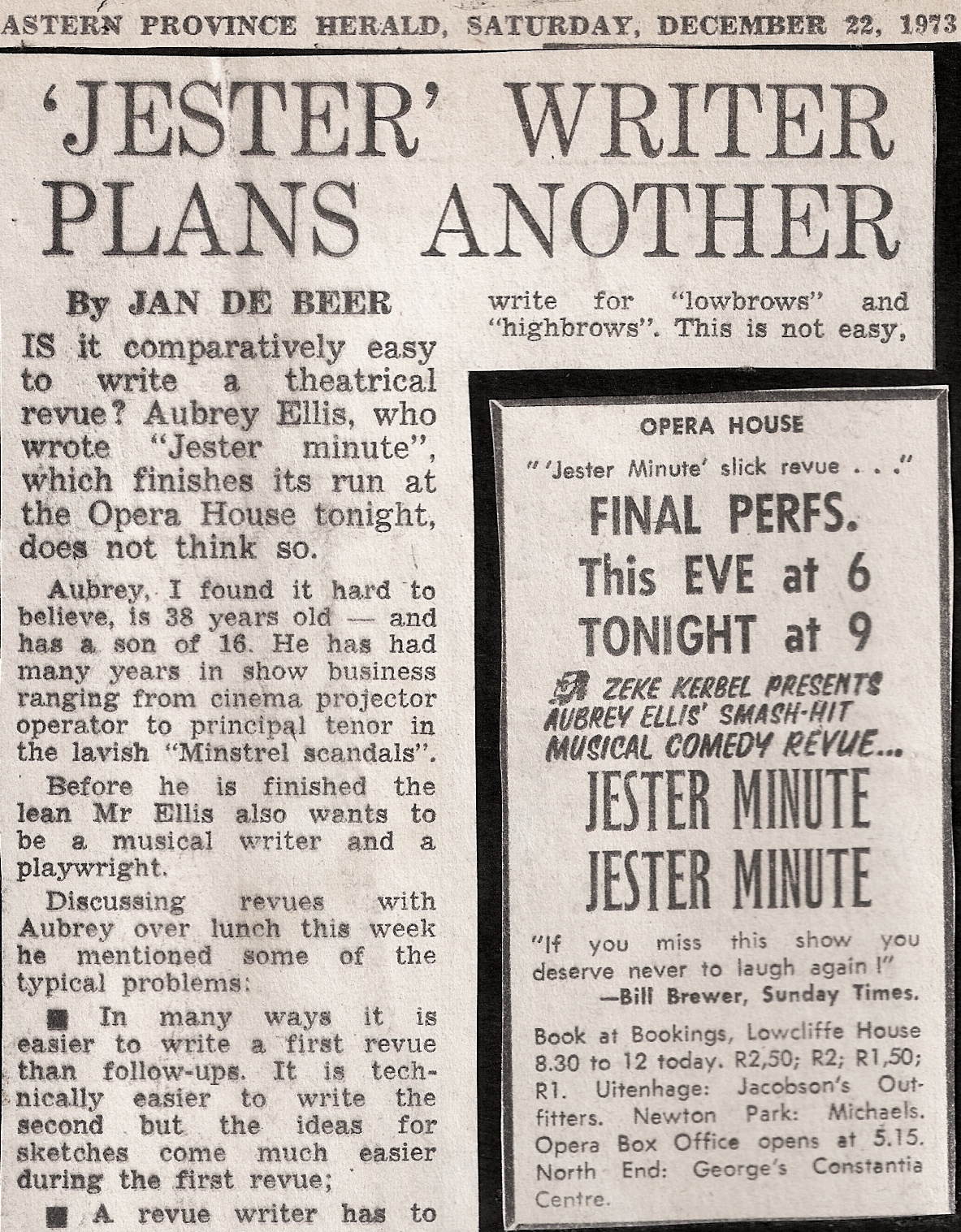
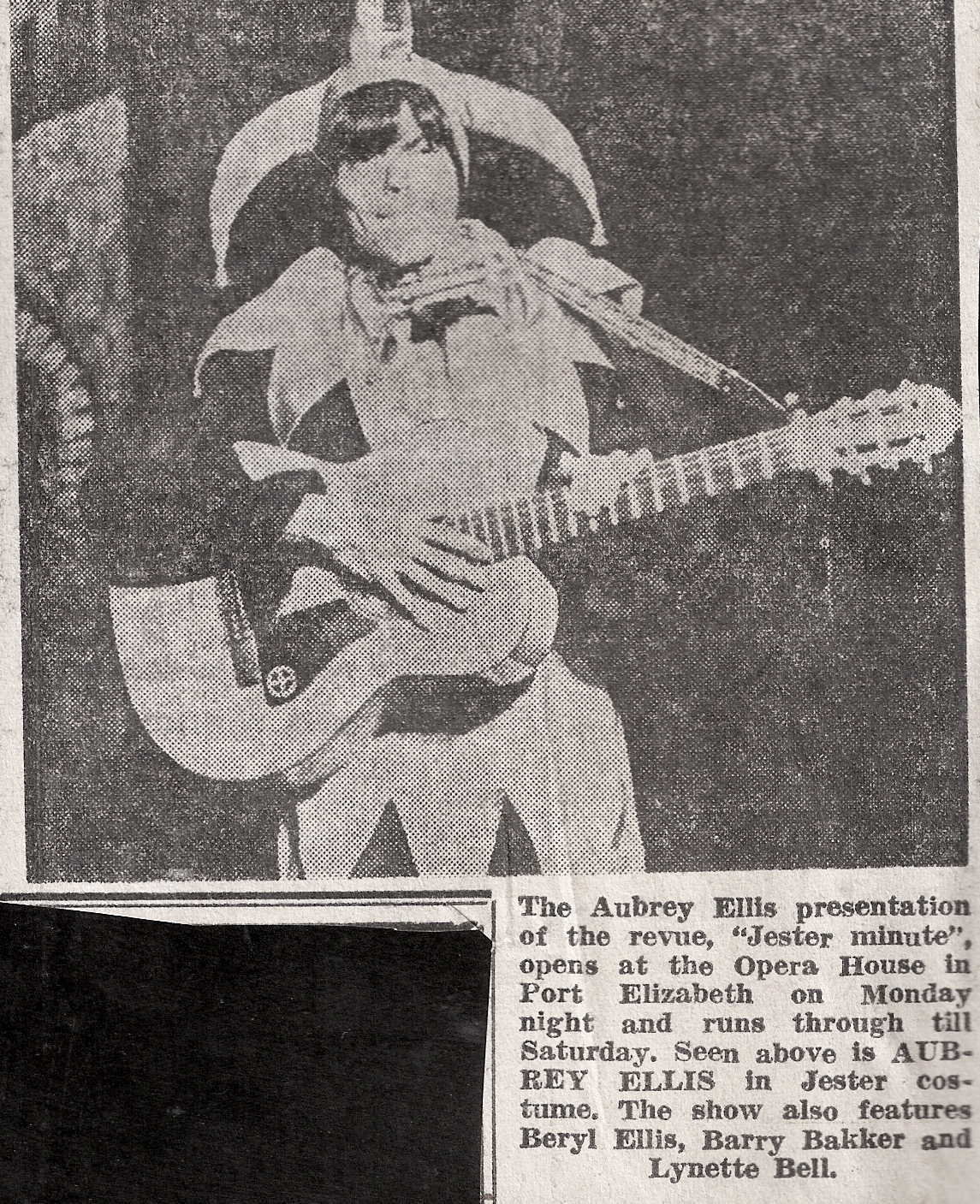
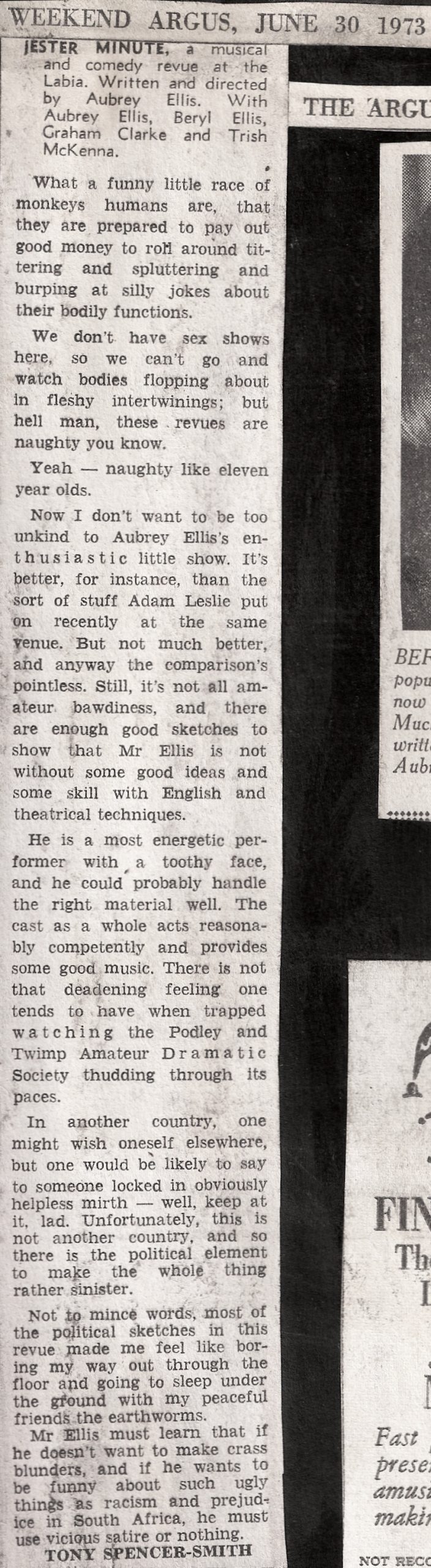
The tour opened in Durban, at the Blue Waters Hotel Dolphin Theatre, with Ronnie Domp still in the cast, joined by Rosemary Dwyer who was a superb comedienne. By the time it reached the Eastern Cape — the Opera House in Port Elizabeth, then the Guild Theatre in East London — Ronnie had been called up for national service, and he and Rosemary were replaced by Barry Bakker and Lynette Bell. A Port Elizabeth reviewer declared “there is a new star on the South African revue horizon… His name is Aubrey Ellis,” praising his “long lean body, mischievous smile, and nimble guitar fingers” alongside a “pleasing voice” already known from his pop and cabaret years — while noting the show, as a first full-length revue script, still showed a young writer’s occasional over-ambition, cramming one laugh too many into a line. In Cape Town, the cast shifted again, to Graham Clark and Trish McKenna.
It was also, for a stretch, a source of real controversy. Aurora — already known from her past as a dancer at Kyalami Ranch — briefly served the Belt’s tables as its “topless” waitress: in practice, a sheer veil worn in deliberately dim, candlelit rooms, technically compliant but visually suggestive enough to spark a genuine legal complaint. The case made the front page of the Star, under the headline “Three in Court.” No prosecution followed, but the feature was quietly discontinued — a brief, colourful footnote in the Belt’s story rather than any real brush with the law.
The material was sharp and current: pointed sketches on Vietnam, Soviet politics, Irish unrest, Hillbrow’s hippie scene, pollution, and the Immorality Act sat alongside pure vaudeville silliness — Aubrey’s George Formby send-up of the vice squad, Aurora’s send-up of three prominent South African men in a “mock-marital marathon.” Amid the satire were quieter moments that caught reviewers off guard: Beryl’s treatment of “Boereplaas” was singled out as “a telling commentary on our national heritage,” and her renditions of “Dunbarton’s Drums” and “Bold Fenian Men” were called genuinely haunting. Critic Raeford Daniel of the Rand Daily Mail called it simply “the funniest show in town.”
By the time the Opera House run in Port Elizabeth wrapped in December 1973, Aubrey — 38 years old, described as having “many years in show business ranging from cinema projector operator to principal tenor in the lavish Minstrel Scandals” — was already talking about what came next: a musical, a play, more revues to write. Jester Minute had, by his own account, only gotten harder to follow the more successful it became — but he was already planning to try.
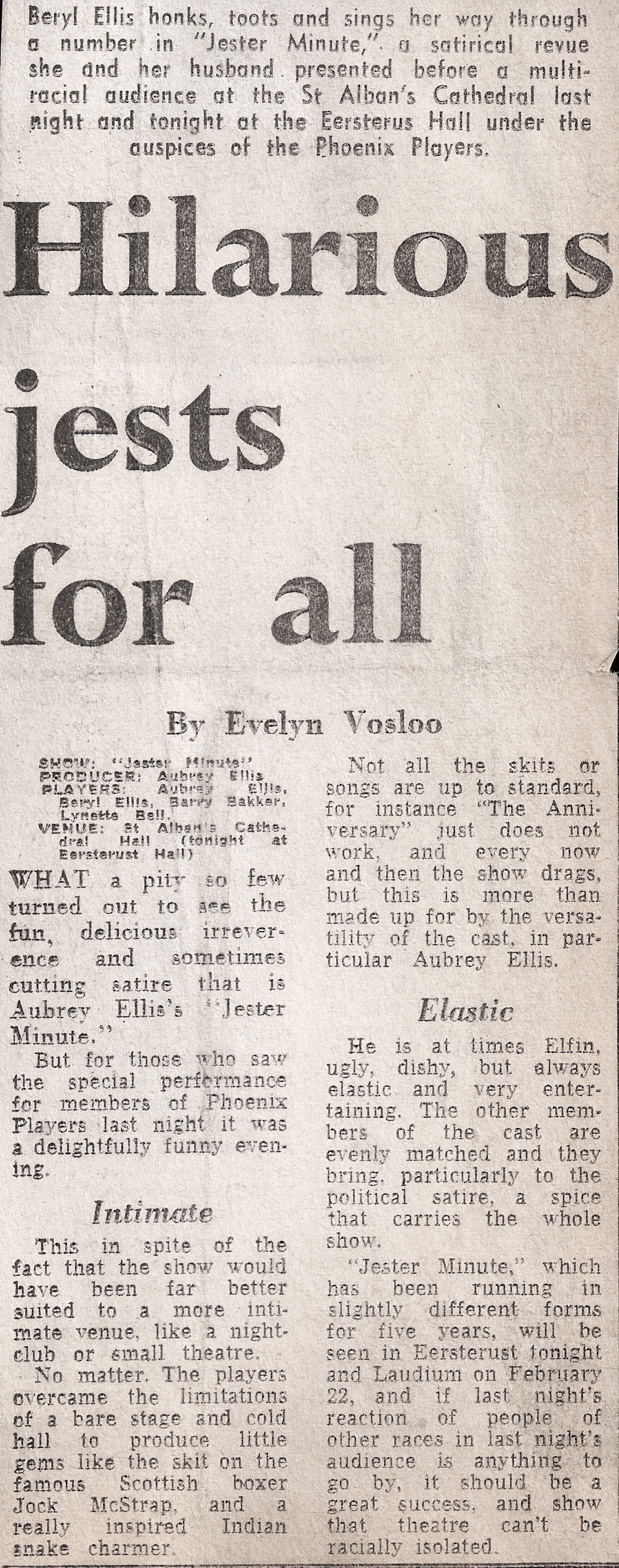
One performance stands out from the rest: a special multiracial showing at St Alban’s Cathedral Hall, under the auspices of the Phoenix Players — reported in the press as proof that “theatre can’t be racially isolated,” at a time when that was very much not a given in South Africa.